
October 31, 2026
How to Ask Your Manager to Prioritize Competing Deadlines
If two assignments have deadlines you cannot realistically meet at the same time, ask your manager to choose the order before you silently guess. Briefly name both tasks, state their actual due dates and the specific tradeoff, then ask which one should take priority. If you have a reasoned recommendation, include it as a recommendation—not as a decision already made.
For example: “I’m working on the client draft due Tuesday and the data review due Wednesday. With the time remaining, I can complete the draft first, but that would move the review later. Which should I prioritize, and should I adjust either timing?” This is clearer than “I have too much to do,” and it gives your manager the information needed to respond.
When to ask for a priority decision
Ask when two or more real commitments conflict and you do not have enough information or capacity to decide which should move. A busy day by itself may not require escalation: you might be able to sequence the work independently. The useful signal is a concrete tradeoff—such as one deliverable slipping, a dependency waiting, or a deadline needing a change.
Before you message, check whether an agreed team process already answers the question. A project plan, ticket priority, service-level rule, or prior manager decision may establish the order. If there is no clear rule, or two stakeholders have each called their request urgent, ask the person who can resolve the conflict rather than asking colleagues to guess.
This is different from asking for an extension on one deliverable. If one task alone is at risk, use a deadline-extension request and explain the impact. If two commitments compete, the first question is which work should come first; a revised date may follow from that decision. For a single threatened deadline, see how to ask your manager for a deadline extension before it slips.
Prepare the facts before you send anything
Keep the preparation short and factual. You do not need a full workload report for a quick chat, but you do need enough context to make the tradeoff visible.
- Name each assignment. Use the project, task, or deliverable name your manager will recognize.
- Give the deadline and its source. Distinguish a confirmed due date from a target, estimate, or date you inferred. Do not convert “ideally by Wednesday” into a firm commitment.
- Describe the conflict. State what cannot happen if you take one task first: for instance, “the review would start Thursday instead of Wednesday.” Only include a consequence you can support.
- Mention dependencies or risks that matter. A teammate waiting on your output, a client meeting, or a required approval can affect priority. Avoid dramatic language when a plain explanation is enough.
- Decide what you need from the manager. Is the choice about order, scope, deadline, or an owner? Ask the question that unlocks the next action.
Carleton University’s Workload Conversation Guide recommends reflecting on competing priorities, bringing relevant task and deadline information, and being clear about the conversation goal. Minnesota’s workload-planning guidance likewise gives an example of naming tasks with overlapping deadlines and asking leadership which is highest priority. These are preparation aids, not universal workplace rules; use your organization’s own process where one applies.
A simple message structure
Use four parts: context, competing work, tradeoff, decision request.
Hi [Manager], I’m balancing [Task A], due [date], and [Task B], due [date]. I can take [A] first, which means [specific impact on B]. Which should I prioritize? If [constraint] is fixed, I recommend [option] because [brief reason].
Replace every bracket with information you have verified. If you do not know how long the work will take, say that you need to estimate it rather than inserting a made-up number. If you do not yet have a recommendation, remove that sentence and ask for the decision directly.
Short chat or Slack message
I have [A] due [date] and [B] due [date], and I can’t complete both by those dates at the current scope. Which should come first? If [known constraint] is fixed, I suggest [A] because [reason].
This version is appropriate when your manager has enough context and the choice is straightforward. Keep it in the work channel your team normally uses; the article’s examples are wording suggestions, not instructions to use a particular service.
More context for email or a one-to-one
Subject: Priority decision for [Task A] and [Task B]
Hi [Manager],
I’m currently responsible for [Task A], due [date], and [Task B], due [date]. Based on the current scope, I can complete [specific next step] for one before moving to the other. If I start with [A], [specific effect on B] may follow.
Could you confirm which should take priority, and whether either scope or due date should change? My recommendation is [A/B] because [brief, verifiable reason], but I’ll follow the priority you set.
Thanks,
[Name]
Use the longer version if the manager needs background, the work affects another person, or the decision should be documented. “I’ll follow the priority you set” is useful only if it reflects your actual intent and authority. Do not promise a new date until you have checked that it is feasible.
If you can recommend an order, say why
A recommendation can reduce back-and-forth, but it should make the decision easier—not disguise an unsupported preference as a fact. Tie it to a known dependency, confirmed deadline, customer impact, or agreed project goal.
For example:
“I recommend finishing the access review first because the implementation team is waiting on that result. The client summary would then move to [realistic date, if confirmed]. Does that order work?”
If the date is not confirmed, leave it open: “I can estimate the revised date after we confirm the order.” If the tasks are equally important or the consequences are unclear, present the choices neutrally and ask your manager to decide. You are not required to manufacture a ranking just to sound decisive.
What to avoid
- A vague alert: “I’m overwhelmed—what do I do?” The feeling may be genuine, but it does not show which decision is needed.
- A false either/or: “I can only do one” when a different scope, owner, or sequence may be possible. Describe the actual constraint, then ask.
- An implied accusation: “You gave me two impossible deadlines.” Keep the focus on the commitments and the decision needed, not blame.
- Invented certainty: Do not claim that a client will be upset, a launch will fail, or a date is fixed unless you know that.
- A hidden promise: “I’ll finish both tonight” can create a new commitment before priorities or effort are clear.
- A scattered list: A long inventory of every open task can bury the immediate conflict. Include other work only if it changes the choice.
If the tasks involve safety, legal, regulatory, or formal service obligations, follow the appropriate escalation and documentation process rather than treating a quick chat as sufficient. This guide offers communication wording, not legal or compliance advice.
After your manager responds
Repeat the decision in one sentence so both of you share the same understanding. If the order changes a date, scope, or handoff, confirm that explicitly rather than assuming it.
“Understood—I’ll complete [A] first. That means [B] will move to [date/next step, if agreed]. I’ll flag it if the estimate changes.”
If the reply only says “do what you think is best,” clarify the decision boundary: “I recommend [A] because [reason]. Are you comfortable with [B] moving to [date], or should I choose the other order?” If the manager is unavailable and action cannot wait, use the clearest documented team priority you have, state your working assumption, and avoid promising an outcome that depends on someone else.
For a related status note when the issue is a dependency rather than a priority choice, use a project blocker update without blame. If the answer is that the new assignment cannot fit at all, a professional way to say no to more work over text may help you set a clear capacity boundary.
Turn the structure into a reusable RewriteMate command
If you often draft priority questions from your phone, a custom command can remind you to preserve the facts and ask one clear question. RewriteMate’s custom command recipes explain how its saved instructions work. Treat the instruction below as a drafting aid: provide the real details yourself, then review the result before sending.
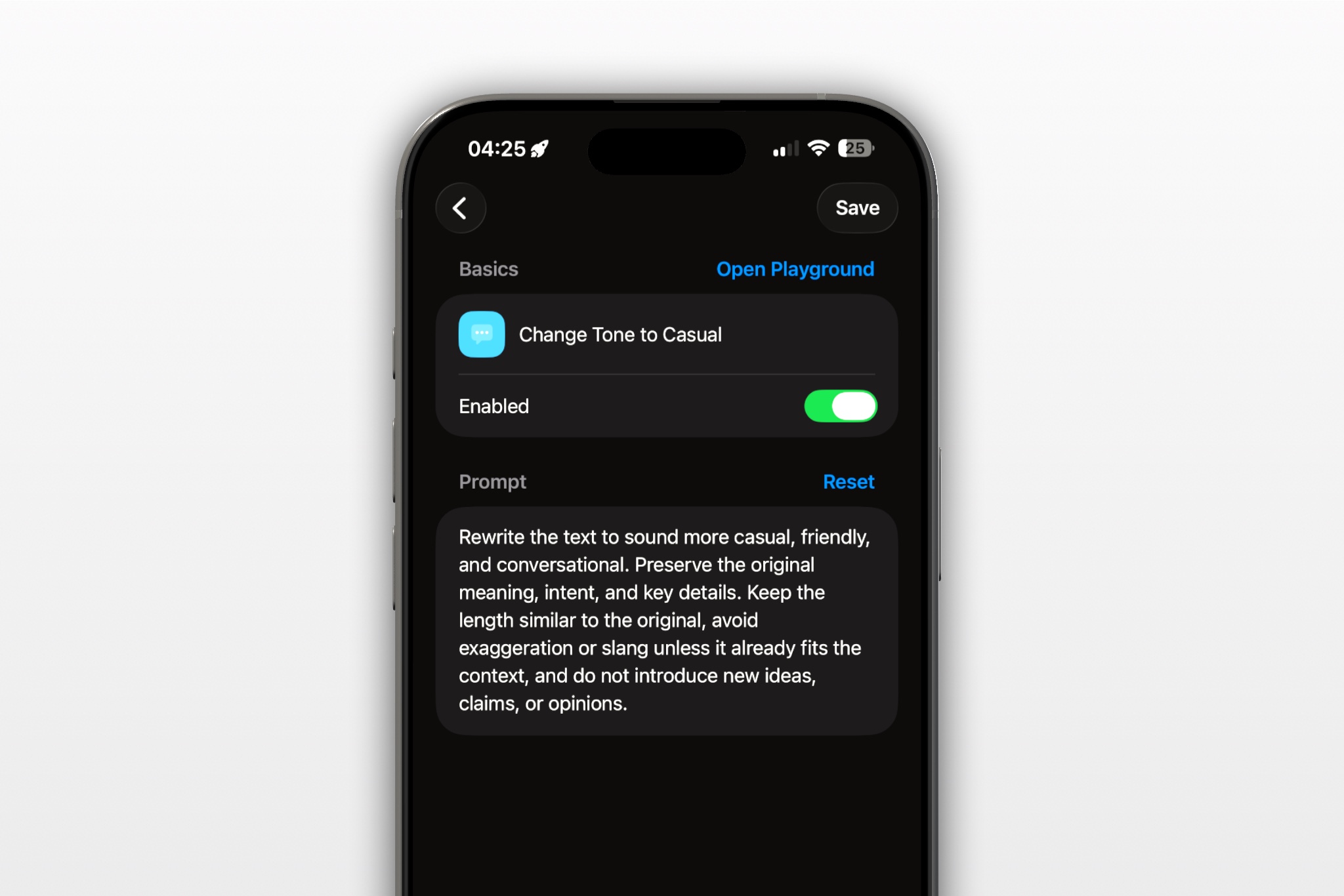
Command name: Clarify Work Priority
Instruction: “Draft a concise, respectful message to my manager asking which of the listed work items should come first. Use only details in my notes. Preserve task names, dates, owners, dependencies, and stated consequences exactly. Do not invent effort estimates, deadlines, urgency, approvals, or promises. State the conflict plainly, include my recommendation only if I supplied one and its reason, and end with one direct question. If key information is missing, leave a bracketed placeholder or ask me what to confirm.”
Paste your verified task notes as the input. Before using the draft, check names, dates, numbers, who owns the decision, the consequence you described, and whether the wording accidentally commits you to a new deadline. For sensitive work details, use your organization’s approved tools and policies; this command does not establish how any data is handled.
Frequently asked questions
How do I ask my manager what to prioritize without sounding incapable?
Show that you have identified the conflict and the decision needed. A message such as “I have A due Tuesday and B due Wednesday; completing A first would move B. Which should come first?” communicates ownership without pretending you can resolve a manager-level tradeoff alone.
Should I give my manager a recommendation?
Yes, when it is based on a real dependency, confirmed deadline, or agreed goal. Label it as a recommendation and include the reason. If the facts do not support a clear choice, present the options neutrally.
What if my manager does not respond?
If the work can wait, follow up through the team’s usual channel with the decision and timing you need. If it cannot wait, use an existing documented priority rule, state your working assumption, and escalate through the appropriate process when the risk warrants it. Do not claim your manager approved a choice they did not make.
Is this the same as asking for a deadline extension?
No. Ask for prioritization when multiple assignments compete and you need an order. Ask for an extension when one deliverable’s timing is at risk. Sometimes a priority decision leads to a date change, but confirm that separately.
Can RewriteMate choose which task matters more?
Do not rely on a text transformation to know your manager’s goals, team commitments, or hidden constraints. RewriteMate can help draft or transform the message; you supply and verify the facts, make or request the decision, and review every name, date, number, policy, and commitment before sending.
Related articles
Keep reading

How to Ask Your Manager for a Deadline Extension Before It Slips
Tell your manager early, explain the specific blocker, and propose a date you can actually meet. Use these clear work-message examples and a fact-safe RewriteMate command to draft the request from your iPhone.

How to Write a Project Blocker Update Without Blame
Tell your team what is blocked, what is still moving, and exactly what would unblock the work. Use neutral, fact-checked templates that separate confirmed impact from guesses.

How to Say No to More Work Professionally Over Text
Set a clear workload boundary in a work text or Slack message without overexplaining, sounding defensive, or accepting an impossible deadline.

Felix Tran
RewriteMate Dev & Editorial Lead
Write about everyday workflows, systems that help ideas move faster, from first draft to finished work.