
November 1, 2026
How to Ask a Former Manager to Be a Job Reference
Ask your former manager directly and give them enough context to decide: remind them when and how you worked together, name the type of role you’re pursuing, and ask whether they’d feel comfortable serving as a reference. Make it easy to decline. Don’t list their name or share their contact details with an employer until they have agreed.
For example: “Hi [Name]—I hope you’ve been well. I’m applying for [role type] positions and thought of our work together on [project/team]. Would you be comfortable serving as a professional reference if an employer asks? No pressure if the timing isn’t right. I can send the role details and an updated résumé if helpful.” Replace each bracket with true details; if the manager may not remember the project, add a brief reminder rather than assuming they do.
First, check what the employer is actually asking for
“Reference” can mean different things in a hiring process. An employer might ask to speak with a former supervisor, request a written letter, or ask the reference to complete a form. Those are different commitments. Before contacting someone, read the employer’s instructions and use the same description in your request.
If the request only says “provide references,” don’t assume that means a recommendation letter. Ask the employer or recruiter what they expect if it is unclear. A short professional reference conversation may be a smaller request than writing a detailed letter; let the former manager decide once they understand what is involved. Indeed’s reference-request guide, updated June 15, 2026, recommends asking before listing someone and sharing details such as timing. Ohio State’s Fisher College of Business reference guide also advises getting permission first and asking which contact details the person prefers to share.
If the employer has not asked for references yet, you can still prepare a shortlist, but wait to send someone’s details until you understand when and how the employer will contact them. The employer’s actual process takes precedence over a generic template.
Choose a former manager who can speak to the work
The best choice is not automatically the most senior person you once reported to. Think about whether this manager directly saw the work you want them to discuss. Could they accurately describe your responsibilities, strengths, collaboration, or a relevant project? If you worked together only briefly, have not been in touch for a long time, or are unsure they would be comfortable giving a supportive account, consider another reference.
This is a practical judgment, not a guarantee about what an employer will value. Ohio State’s guide suggests professional or academic contacts who can attest to a person’s work and advises selecting people who can provide a positive reference. The University of Pennsylvania Career Services article about personal references is written for healthcare careers, so its field-specific context may not apply to every applicant; its general advice to be respectful of the person’s time and explain why you chose them is still useful as a communication principle.
If you left the organization under strained circumstances, don’t rely on wishful thinking about what the manager might say. You can ask a neutral, low-pressure question if contact is appropriate, but you are not obligated to use that person. Follow employer instructions honestly; don’t present a colleague as your former manager or imply a relationship that didn’t exist.
Reconnect before making the ask
If you haven’t spoken in a while, start with one natural sentence that re-establishes the connection. Don’t write a long apology for being out of touch, and don’t pretend you have been keeping up with their life if you haven’t. A brief, specific reminder helps them place you:
“I was on the [team] at [organization] from [year] to [year], and we worked together on [project or responsibility]. I appreciated your guidance on [specific, genuine detail].”
If you don’t know the exact dates, use a truthful approximate range or omit the dates. The point is recognition, not a résumé-style chronology. Then make the request in the same message or ask whether they would be open to a short conversation if that better fits your relationship.
Email example after a long gap
Subject: Would you be comfortable serving as a reference?
Hi [Name],
I hope you’re doing well. I worked with you on [team/project] at [organization] around [time period], especially on [brief reminder of your work]. I’m now applying for [type of position] roles and wanted to ask whether you’d feel comfortable serving as a professional reference.
The employer may [call/email/ask for a form] around [known timeframe, if known]. I’d be happy to send my current résumé and the role description so you can decide whether you have enough context. No pressure if you’re unavailable or would rather not.
Thanks for considering it,
[Name]
Use “around [timeframe]” only if you know the employer’s timeline. If you don’t, say so: “I don’t have the timing yet, but I’ll let you know before sharing any contact details.” Don’t state that a call is coming next week simply to make the request sound urgent.
Short text or LinkedIn message
Hi [Name]—it’s [your name] from [team/company]. I’m applying for [role type] roles and wondered if you’d be comfortable serving as a reference based on our work on [project]. No pressure if not. If you’re open to it, I can send the details and timing before listing your contact information.
This shorter version works as an initial message when you normally communicate by text or LinkedIn. If the manager says yes, follow up with the fuller role details through the channel they prefer. Don’t send repeated messages across several services just because they haven’t answered immediately.
Make the request specific—and easy to decline
A considerate request answers four questions without demanding a commitment on the spot:
- Who are you? Include your name and a brief reminder of the working relationship.
- What is the opportunity? Share the role type or a specific position and organization when you can disclose it.
- What are you asking them to do? Say whether you mean a conversation, written letter, form, or permission to list them for a possible call.
- When might they be contacted? Give the known date or range, or say that you will confirm it later.
Finish with a real option to say no: “No pressure if you’re unavailable” is useful only if you will accept that answer without arguing. Avoid wording such as “I need you to do this” or “You’d be the perfect reference,” which can sound like the decision has already been made. You can explain why you thought of them—such as their direct knowledge of a project—without telling them what they must say about you.
If you’re asking for a decision in another work context, how to ask for approval without sounding demanding covers that separate request.
If you need a written recommendation rather than a reference call, name that clearly and include the actual deadline and submission requirements. A letter takes different preparation and time. If the deadline is close, acknowledge that, offer an easy out, and ask someone else if the schedule is too tight.
After they agree: send a useful, factual briefing
Wait for a clear yes before sending application materials or listing their information. Then send only what helps them understand the request:
- The job title, organization, and a link or copy of the posting if available.
- Your current résumé and a short description of the responsibilities you held while you worked together.
- The employer’s reference instructions and the likely contact method or deadline, if known.
- One or two real projects or contributions they personally observed that connect to the role.
- The name, email, or phone number they explicitly want you to share.
Ohio State’s guide recommends asking which contact details the reference prefers and supplying an updated résumé and job description. The University of Pennsylvania guide similarly recommends sharing the role and relevant accomplishments after the person agrees; that page focuses on healthcare careers, so treat it as an example rather than a universal employer rule. Do not send confidential work documents or information you are not authorized to share. If a résumé includes sensitive information, remove anything unnecessary before forwarding it.
Briefing note example
Thanks for agreeing to be a reference. Here’s the role description: [link]. The employer expects to contact references [verified timing/method, or “I’m still confirming the timing”]. I’ve attached my current résumé. You may remember my work on [project], where I handled [accurate responsibility]. Please use whichever examples you can speak to comfortably. I’ll confirm before sharing your contact details.
That last sentence is appropriate if the employer’s request or process is not final. If your manager has already agreed that you can provide specific contact details to a named employer, follow that agreement rather than creating unnecessary extra steps.
If they decline or don’t reply
If they decline, thank them and stop there. “Thanks for letting me know—I understand, and I appreciate you considering it” is enough. Don’t ask them to justify their answer or try to persuade them that they should be able to help. A reference who feels pressured may not be the right person for the request.
If they don’t reply, give them reasonable time based on your actual deadline, then send one brief follow-up in the same channel. For example: “Hi [Name], just checking whether you saw my note about a possible reference for [role]. The employer’s deadline is [date, if confirmed]. No worries if you’re unavailable—I’ll make another plan.” If the deadline is imminent, don’t wait on one person: contact another suitable reference and tell the employer only what you can confirm.
This is different from following up with a recruiter about an application. If you are waiting for an employer’s response after an interview, see how to follow up after a job interview when you haven’t heard back.
If you’re concerned that your current employer could learn you are searching, be thoughtful about whom you contact and what you disclose. You can ask a former manager without volunteering unrelated details about your current workplace. Don’t ask them to keep a secret they may not be able to guarantee, and follow any instructions or confidentiality obligations that apply to your situation.
Save a fact-safe request recipe in RewriteMate
If you write similar professional messages on your iPhone, a RewriteMate custom command can help you shape a draft from details you provide. Its custom-command guide explains saved writing instructions. The command below is a drafting aid: it cannot decide whether a former manager is an appropriate reference or know the employer’s process unless you supply and verify those details.
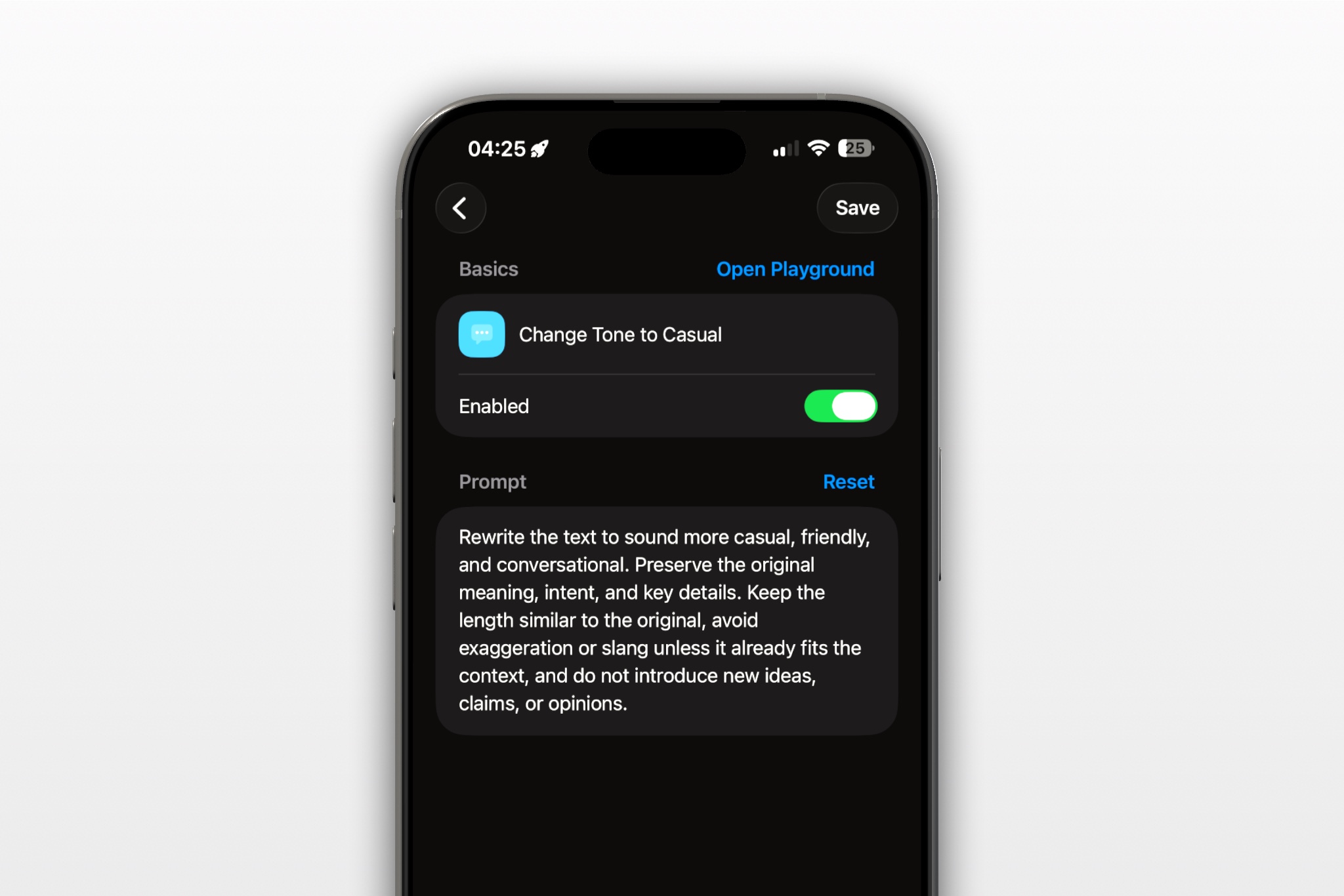
Command name: Ask for a Job Reference
Instruction: “Draft a concise, respectful message asking [former manager] whether they would feel comfortable serving as a job reference. Use only the facts I provide. Preserve names, organizations, dates, role titles, contact methods, deadlines, and project details exactly. Include a brief reminder of how we worked together, explain the role I’m pursuing, state what the employer will ask only if I supplied it, and make it easy for them to decline. Do not claim they agreed, invent a deadline, imply they gave a positive reference, or ask for a letter unless I explicitly request one. If key details are missing, leave a bracketed placeholder or ask me what to confirm.”
Before sending, verify the manager’s name, your role and dates, the job title, the type of reference requested, the timeline, and whether your message accidentally implies consent. Share contact information only in line with the person’s agreement and the employer’s instructions.
Frequently asked questions
How do I ask a former manager to be a reference after years without contact?
Reintroduce yourself with your name, former team or organization, and one specific reminder of the work you shared. Then explain the role you’re pursuing and ask if they would be comfortable serving as a reference. Be honest about the time since you worked together and give them room to decline.
Should I ask before putting someone on my reference list?
Yes. Ask their permission before listing them or sharing their contact details. Confirm which email address or phone number they want you to provide, and tell them how and when the employer may reach out if you know.
What if I need a letter of recommendation, not a reference call?
Say that explicitly. A letter is a separate request from permission to list someone for a possible reference call or form. Give the real submission instructions and deadline, and don’t assume your former manager has agreed to write a letter because they agreed to be a reference.
What should I send after a former manager agrees?
Send the job description or link, your updated résumé, relevant accurate accomplishments they may remember, and the employer’s instructions and timing if known. Ask which contact details they prefer to share. Avoid sending confidential documents or overstating what you did.
Can RewriteMate ask the former manager or provide the reference?
No. RewriteMate can help draft or transform your request, but you choose whom to contact, confirm the employer’s process, obtain the person’s consent, and review all names, dates, role details, and commitments before sending.
Related articles
Keep reading

How to Follow Up After a Job Interview When You Haven’t Heard Back
If the hiring timeline has passed and you have no update, send one brief, courteous message asking about next steps. Use these timing rules and adaptable email examples without treating silence as a definite rejection.

How to Ask for Approval Without Sounding Demanding
Request a decision clearly in email, Slack, or text without vague follow-ups, unnecessary apologies, or pressure disguised as politeness.

How to Ask a Freelance Client for Honest Feedback Without Sounding Needy
Ask once, at a natural project close, and make it easy for a client to be candid—or decline. Use these short examples and a reusable RewriteMate command to keep the request appreciative, specific, and pressure-free.

Felix Tran
RewriteMate Dev & Editorial Lead
Write about everyday workflows, systems that help ideas move faster, from first draft to finished work.