
October 18, 2026
How to Reply When a Client Requests Work Outside Scope
When a client asks for work that may be outside the agreed scope, don’t reflexively say “sure” or “that’s not included.” First compare the request with the proposal, statement of work, or other agreement you actually have. If it is clearly additional, acknowledge the request, name the difference neutrally, and offer a next step—such as a separate estimate, a swap with an existing deliverable, a later phase, or a clearly defined one-time courtesy. If the agreement is unclear, ask a question before you label the request extra.
The aim is to protect both the working relationship and your own boundaries without inventing a fee, deadline, or contractual rule. The wording below is general business communication, not legal advice. If there is a dispute or the agreement has specific change procedures, review the actual terms and seek qualified advice for your situation.
First decide: is it actually outside scope?
An idea being new does not automatically mean it is out of scope. The project agreement may include reasonable adjustments, a certain number of revision rounds, or work described broadly enough to cover the request. Check the written terms and the project history before replying. A practical freelancer guide from ScopeYes also recommends comparing the new ask with agreed deliverables, revision limits, direction, and timing before treating it as additional work.
Use this quick comparison as a drafting aid, not as a substitute for your agreement:
| Check | Ask yourself | Possible next step |
|---|---|---|
| Deliverable | Is this output listed or clearly implied in the agreed work? | If uncertain, clarify before calling it extra. |
| Quantity | Does it add a page, version, channel, or revision round? | Describe the specific addition. |
| Direction | Does it replace a decision or approved direction? | Confirm whether the client wants a change or a refinement. |
| Timing | Does it require a rush or move another milestone? | State only a schedule impact you have verified. |
| Trade-off | Could it replace something already planned? | Offer a scope swap if that is genuinely workable. |
Keep the wording factual. “The current brief includes two landing-page concepts; this request adds a third” is clearer and less personal than “You keep asking for more.” If the original description is vague, acknowledge that ambiguity rather than asserting a boundary you cannot support.
A calm four-part reply
Most replies can follow this order:
- Acknowledge the request. Show that you understand what the client wants.
- Refer to the agreed work. Name the relevant deliverable or limit without blame.
- Explain what is not yet decided. If the fee, timeline, or treatment is not confirmed, say you will check or estimate it.
- Offer a clear next step. Ask whether they want an estimate, a scope swap, a later phase, or to keep the original plan.
For example:
Thanks for sending this over. I understand you’d like to add [requested item]. The current scope covers [agreed deliverables], and I don’t see [requested item] listed there. I can check what adding it would involve and send you an estimate and any schedule impact before I begin. Would you like me to do that, or should we keep the current scope?
This version does not presume the request is billable, promise an amount, or commit to a delivery date. Replace each bracket with information you have checked. If you already know the commercial terms and have authority to offer them, you can be more specific; otherwise, leave those details for a confirmed estimate or change request.
Copy-and-adapt replies for common situations
A new deliverable is being added
Use this when the client wants an additional output, such as another page, format, campaign, or version that is not included in the agreed deliverables.
I can look into adding [new deliverable]. The current scope covers [existing deliverable], so I’ll first confirm the additional work and any effect on the schedule. I can send a separate estimate for your approval before starting. Would you like me to prepare that?
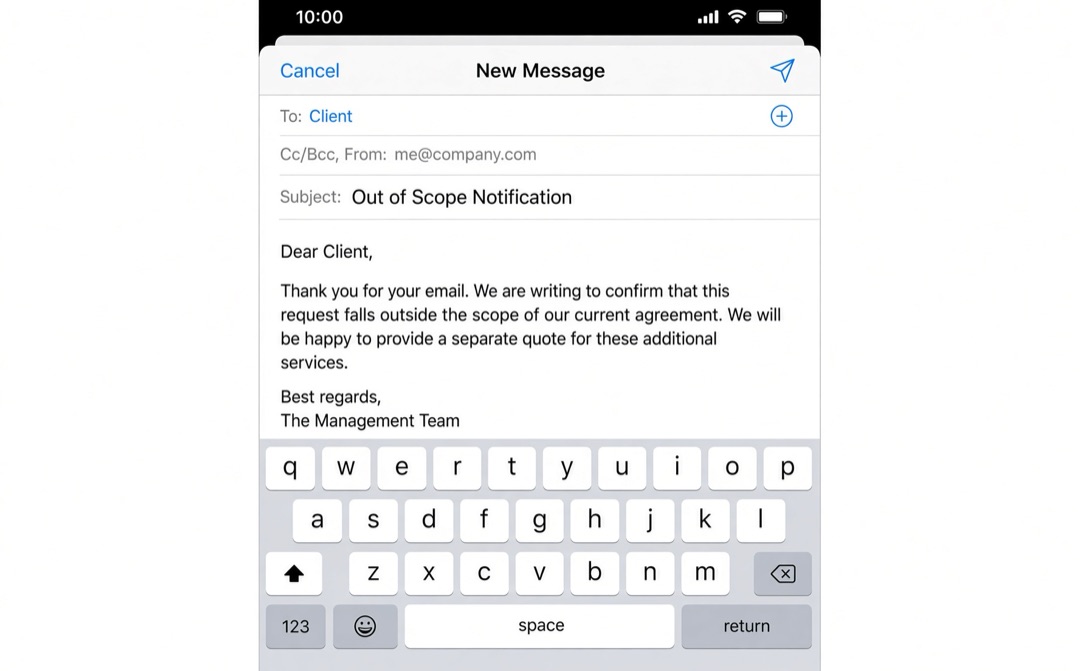
Mockup: Use a scope-confirmation reply only after checking the agreement.
If you already have an approved price and timeline, replace the estimate language with those verified details. Avoid promising “I can have it by Friday” until you have checked your workload and dependencies.
The client asks for another revision
Before sending a boundary-setting reply, check what the agreement says about included revisions and whether the latest feedback fits the agreed review round. If it clearly exceeds that limit, you can say:
Thanks for gathering these notes. The project included [confirmed number] revision round(s), which we’ve completed. I can review this next set as an additional round and confirm the cost and timing before I begin. Would you like me to send that estimate?
If you are not sure whether the feedback counts as a new round, ask which items the client considers essential and compare them with the agreed revision process. Don’t turn a disputed interpretation into an accusation.
The client calls it “one quick thing”
Don’t argue about whether the task is quick before you understand it. Acknowledge the goal, identify what is changing, and decide whether you want to include it as a courtesy, estimate it, or defer it.
I understand why that would be useful. I’ll check how [specific change] fits with the approved work before I confirm. If it is additional, I can outline the options and any timing impact so you can choose what works.
This leaves room to be generous without silently promising that every similar request will be free.
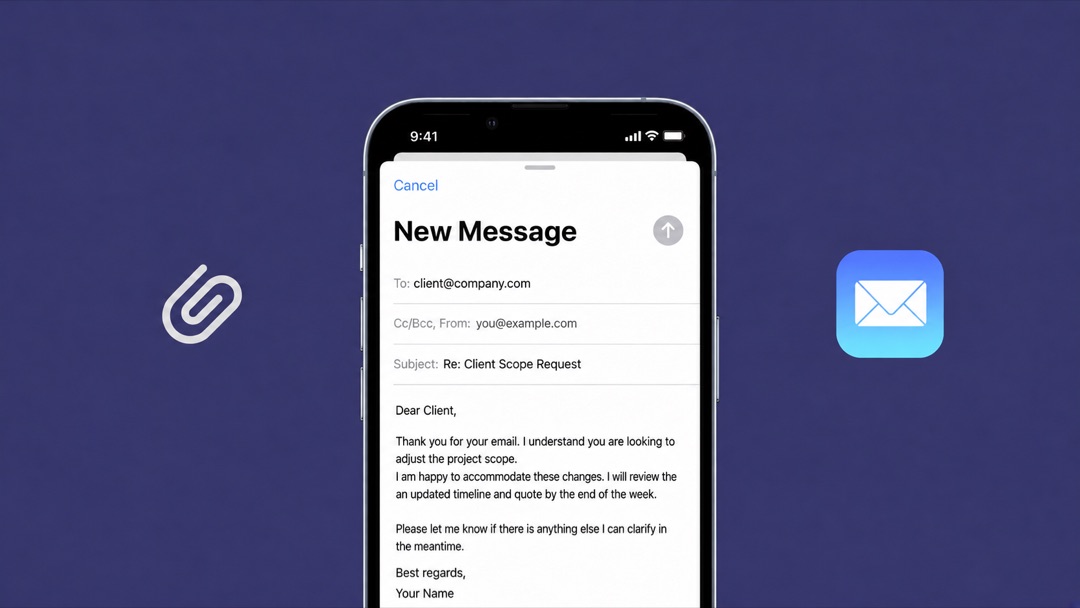
Mockup: Check the scope before promising extra work.
You want to include a small extra as a one-time courtesy
You can choose to do a small item at no extra charge if that makes sense for the relationship and the project. Make the exception specific; don’t imply a general policy or broaden the deliverable unintentionally.
I can include [one specific change] as a one-time courtesy for this project. The agreed scope otherwise stays the same, including [relevant limit]. If you need further additions, I’ll outline them separately before starting.
Only use this if you are genuinely comfortable with the time and work involved. If the request may be larger than it sounds, clarify it first.
You need to decline the addition
Sometimes the request is outside the work you can take on, even with a separate estimate. You can be direct and courteous:
Thanks for thinking of me for this. I’m not able to take on [requested work] within this project. I can continue with [agreed work] as planned, or we can discuss a separate referral or later phase if that would help.
Do not invent a reason or over-explain. If you can recommend a genuine alternative, do so; otherwise, a clear boundary is enough.
What to avoid saying
- “Sure, no problem.” If you mean “I’ll assess it,” say that instead; an unqualified yes may sound like acceptance.
- “This will cost extra” before checking. Verify the agreement and whether the request is actually additional.
- A made-up price or date. Leave a placeholder or say you will confirm the estimate and schedule.
- “That’s not my job.” Refer to the agreed deliverables rather than judging the client’s request.
- A legal-sounding threat. Keep the first message focused on the work and next decision. If the exchange has become a contract dispute, stop improvising and get appropriate advice.
- Starting before the decision is clear. If the new work depends on approval, make that condition explicit and follow the process in your agreement.
The ScopeYes guide offers a related structure—acknowledge the request, identify the scope difference, explain the impact, and ask for a decision. Treat that as a communication framework only; the terms of your own agreement and local rules may differ.
A saved command for drafting the reply on iPhone
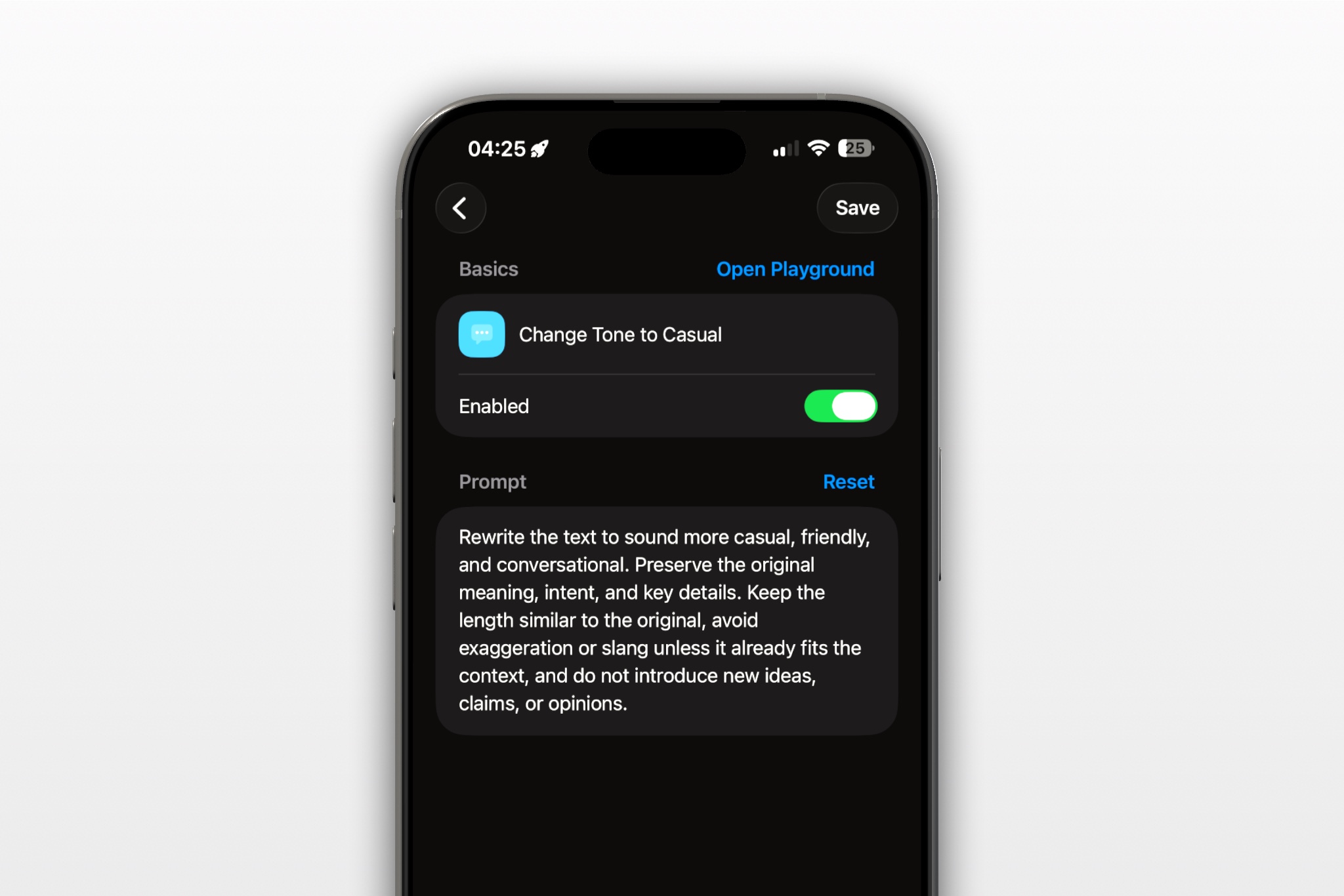
If you often answer client requests from your phone, you can save an instruction that reminds you to preserve facts and uncertainty. RewriteMate’s Custom Command Recipes explains that custom commands are user-written instructions saved as keyboard shortcuts, and includes a professional-email recipe. It can help shape text you provide; it cannot determine what your contract covers, set your price, or decide whether you should accept the work.
Try adapting this instruction in a saved command:
Rewrite my draft as a calm, professional reply to a client. Preserve the requested work, agreed deliverables, names, dates, prices, and commitments exactly. Do not decide whether the request is in scope. Do not invent a fee, deadline, approval, contract term, or reason. If the draft is missing a fact, retain
[CONFIRM: detail]. Keep the reply concise and ask one clear next-step question. Do not make legal claims.
Name the command something recognizable, such as “Client Scope Reply,” and place it with your work-related commands if you organize them into folders. Use Copy as the cautious output choice if you want to compare the rewrite with your original before replacing anything. Review the result line by line, then check it against the actual agreement and your availability before sending.
If this is an unusually consequential client relationship or the request changes rights, payment, confidentiality, or liability, a writing assistant is not a substitute for reviewing the contract or getting professional advice.
Before you send: a short check
- Did you compare the request with the current agreement or approved brief?
- Have you distinguished a confirmed scope change from an unclear requirement?
- Are every price, date, deliverable, and promise verified?
- Does the client have a real choice about how to proceed?
- Have you stated whether work will wait for a decision, if that is your process?
- Does the message sound firm about the work without assigning blame?
If the client replies with approval, make sure the requested work, price, timeline, and approval method are recorded as required by your agreement. A text message or email can be useful project context, but whether it changes a contract depends on the terms and applicable law. For legal uncertainty, consult a qualified professional in your jurisdiction.
FAQs
How do I tell a client that a request is out of scope?
First check the agreed deliverables and revision terms. If the request clearly adds work, acknowledge it, identify the specific difference, and offer a next step such as an estimate, a scope swap, a later phase, or a defined courtesy. If the agreement is ambiguous, ask for clarification before labeling it out of scope.
What should I say when a client asks for extra work for free?
You do not have to decide on the spot. You can say that you’ll compare the request with the agreed scope and confirm whether it can be included, swapped, or estimated separately. If you choose to do it as a courtesy, define exactly what is included and avoid implying that the same exception applies to future work.
Should I give the client a price in the first reply?
Only if you have checked the request, confirmed how it fits the agreement, and can stand behind the price. Otherwise, tell the client you will assess the addition and send a separate estimate. Do not guess a price or schedule just to make the reply sound complete.
What if I’m not sure whether the request is included?
Avoid presenting your interpretation as settled. Refer to the relevant wording, explain what is unclear, and ask a focused question about the requested outcome. If money, rights, or a dispute is involved, consider getting qualified advice rather than relying on a message template.
Can an AI keyboard write this client reply for me?
It can help revise a draft according to an instruction you provide. It cannot verify your agreement or make the business decision for you. Check all scope details, fees, deadlines, approvals, and commitments against your records before sending.
Should I start the extra work while we discuss it?
Follow the approval process in your agreement and your own business workflow. If you need approval before starting, say so plainly and wait for the required decision. The correct process can depend on the agreement and circumstances, so this general guide is not a legal determination.
Keep the boundary clear and the next step easy
A useful reply does not need to be harsh. Check the agreement, describe the difference without blame, and offer a practical way forward—while keeping unconfirmed prices, dates, and promises out of the message. Use a RewriteMate command only to help shape the words you have supplied; you remain responsible for checking the scope and deciding what to offer.
Related articles
Keep reading

How to Ask for Approval Without Sounding Demanding
Request a decision clearly in email, Slack, or text without vague follow-ups, unnecessary apologies, or pressure disguised as politeness.

How to Tell a Client You Need More Time Professionally
A clear way to request more time from a client without making excuses, overpromising a new date, or leaving the next step unclear.

Felix Tran
RewriteMate Dev & Editorial Lead
Write about everyday workflows, systems that help ideas move faster, from first draft to finished work.